SIGMA

ART

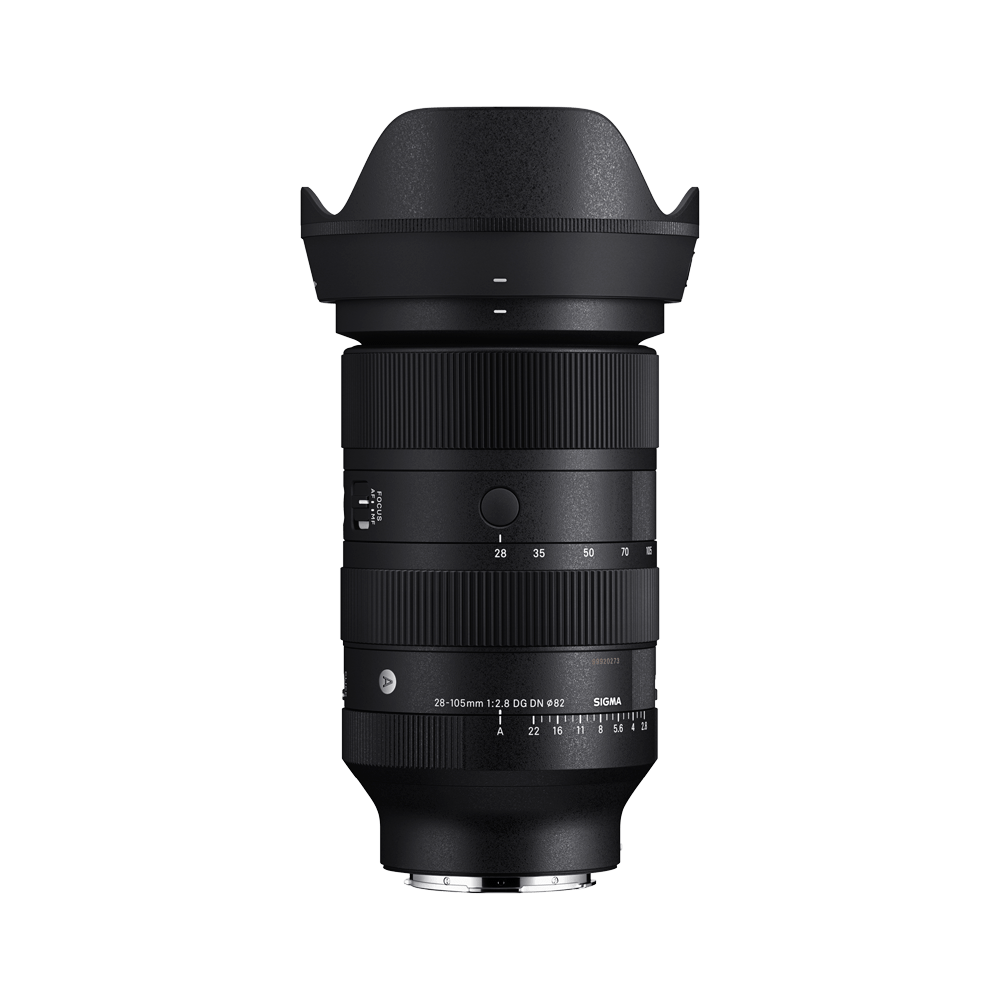
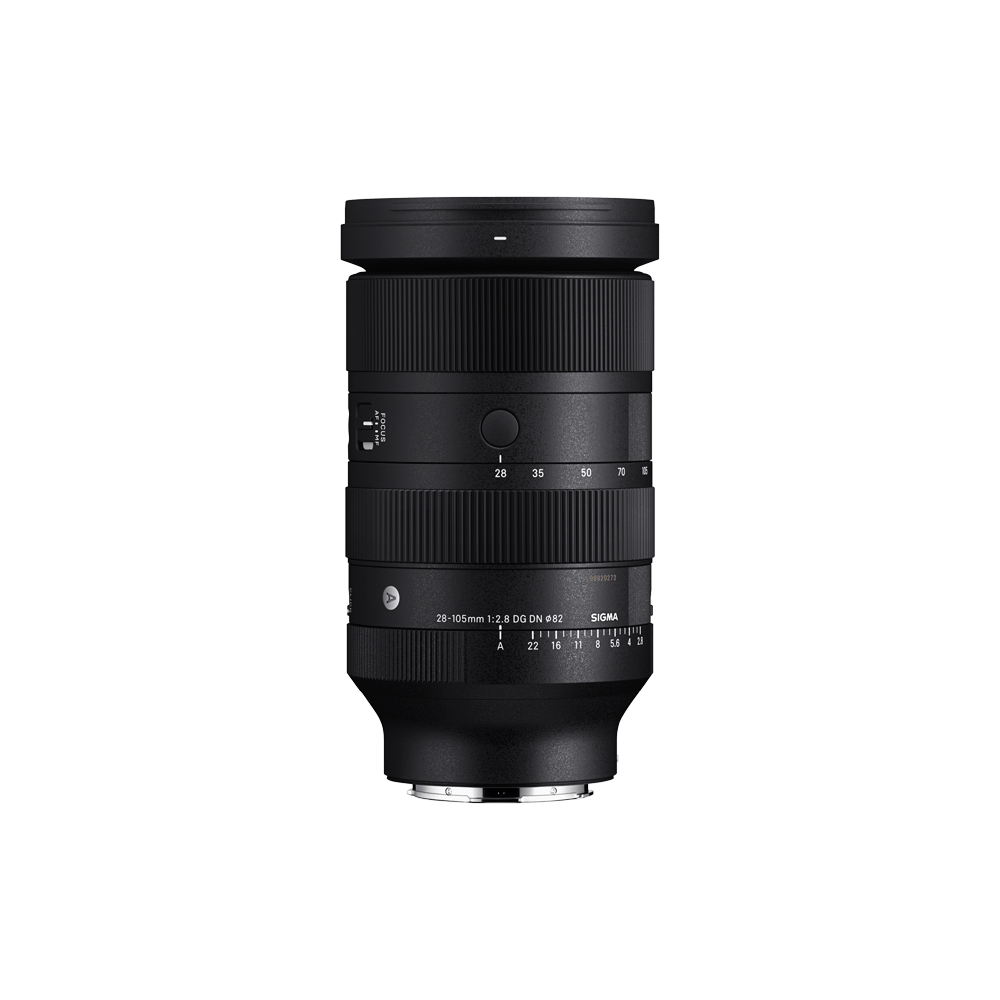
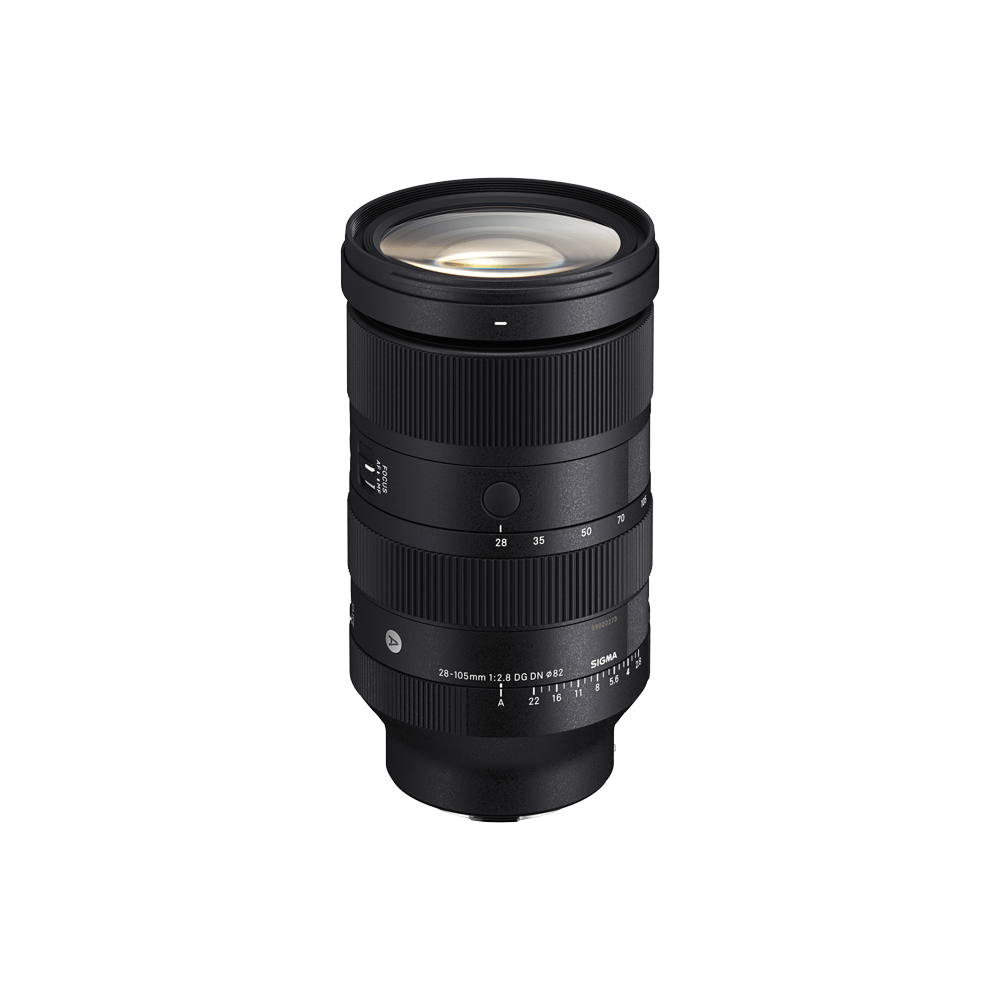
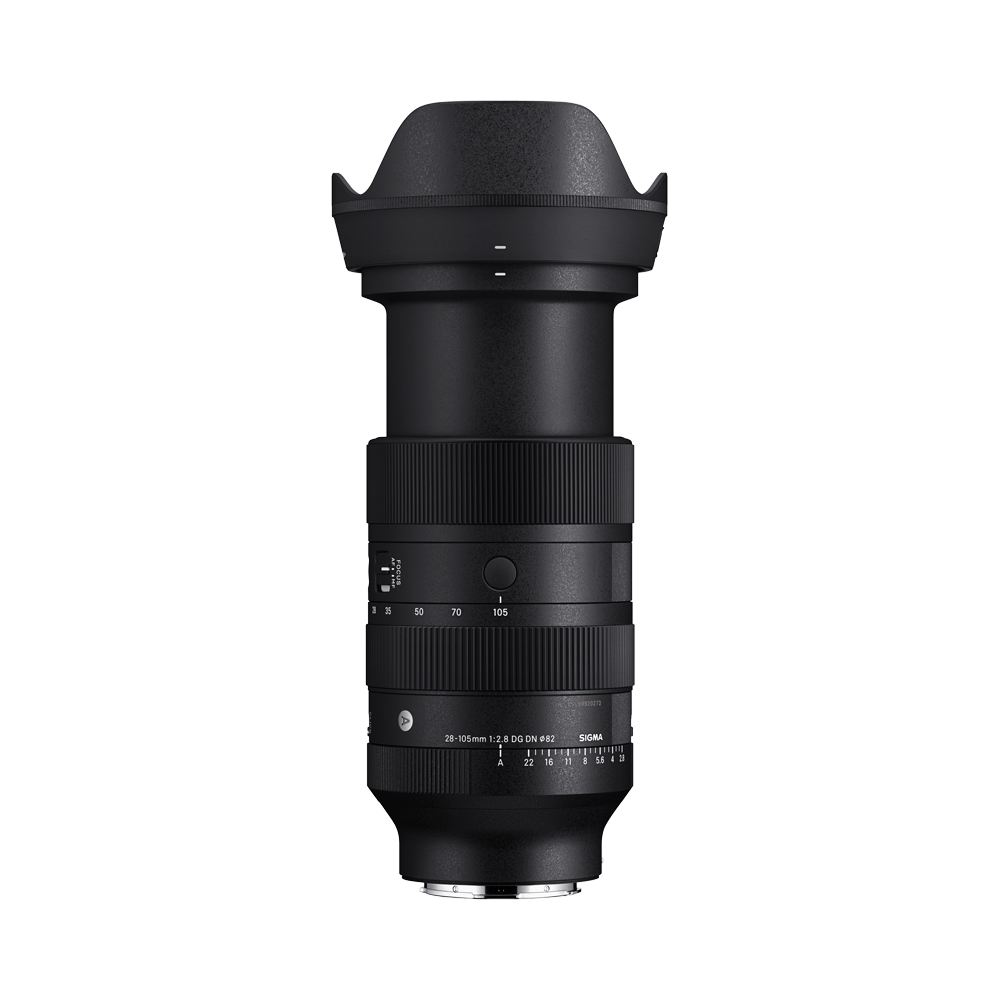
28–105mm F2.8 DG DN

ART

28–105mm F2.8 DG DN

Available Mounts

L-Mount
Sony E-Mount
  • Constant F2.8 aperture across a versatile 28-105mm zoom
  • Superb portability thanks to a weight of less than 1kg
  • Professional features, fast AF and excellent build quality

BEYOND STANDARD

Harness the power of this versatile and portable F2.8 optic with an extended 28-105mm focal range – a standard zoom that goes well beyond standard.

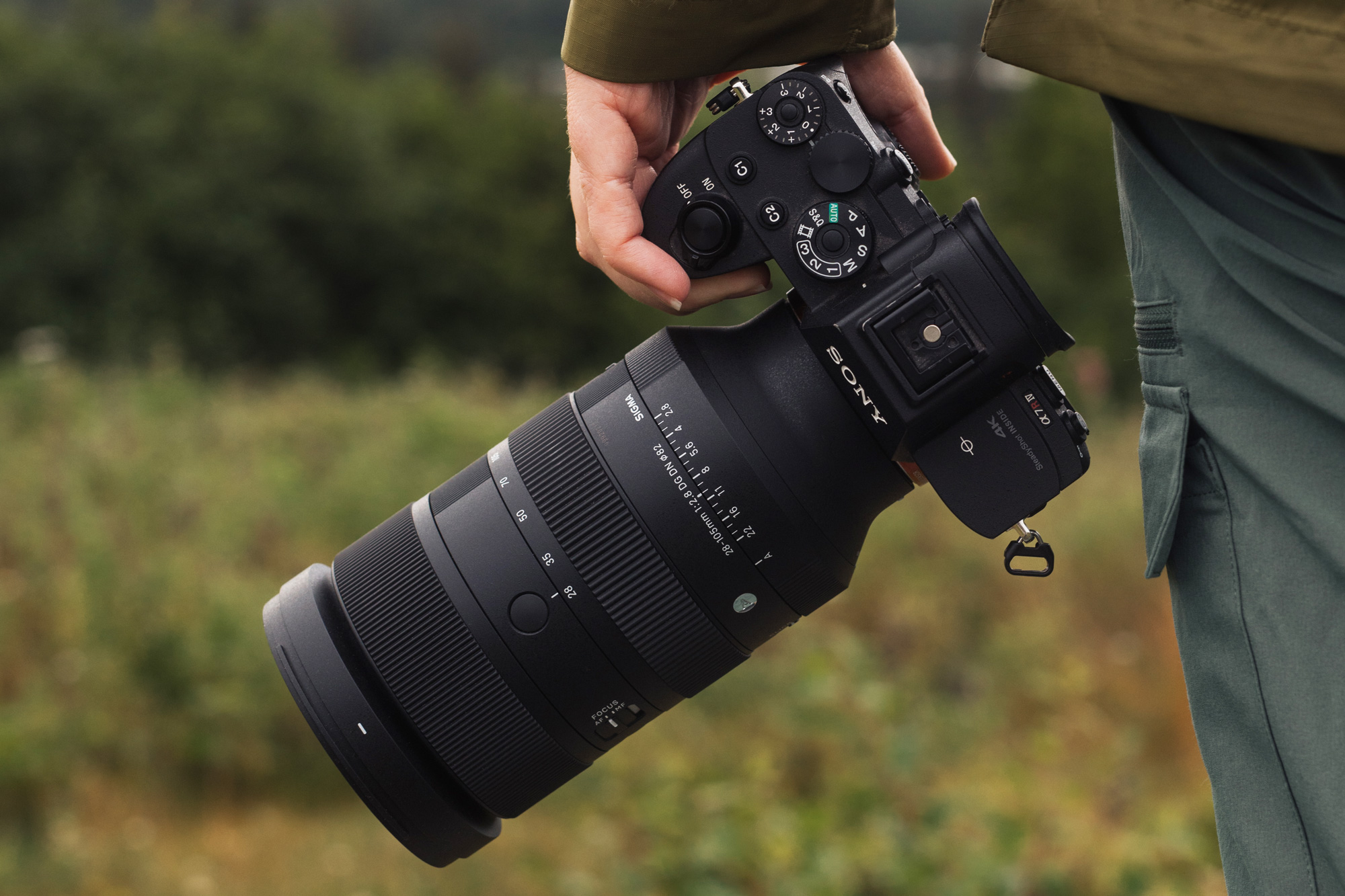
The Sigma 28-105mm F2.8 DG DN | Art is not just another standard zoom lens. With a powerful wide-angle to medium telephoto focal length and a bright F2.8 aperture throughout, this full-frame mirrorless zoom combines outstanding optical performance, superb build quality and a range of pro-grade features to make it one of the most versatile optics on the market for mirrorless systems.

The lens is built to tackle a huge range of subjects and situations, from expansive low-light landscapes to portraits with big, beautiful bokeh, and thanks to Sigma’s latest optical technology and the use of large diameter elements including FLD, SLD and five aspherical elements, it is able to do so with superb clarity and sharpness. This allows the lens to deliver exceptional versatility without compromising on optical quality. The lens also includes high-speed AF with HLA technology, a rugged dust- and splash-resistant structure, and various functions such as an aperture ring, all packed into a compact and lightweight body weighing less than 1kg, making it an exceptional all-round choice for both stills and video.

Camera TypeMirroless
Corresponding MountL-Mount, Sony E-Mount
Sensor FormatFull-frame [DG]
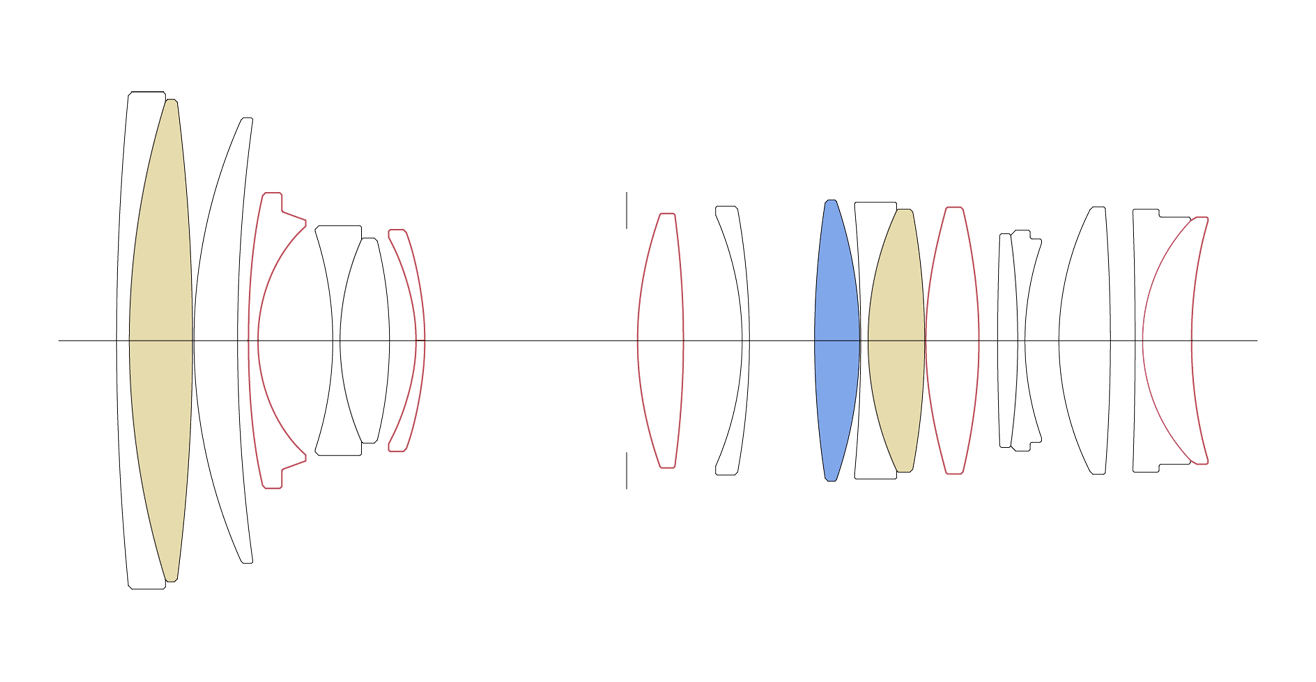
Lens Construction18 elements in 13 groups (2 FLD, 1 SLD, and 5 aspherical elements)
Angle of View75.4°-23.3°
Number of Diaphragm Blades

12 (rounded diaphragm)

Minimum ApertureF22
Minimum Focusing Distance40cm
Maximum Magnification Ratio1:3.1(at 105mm)
Filter Sizeφ82mm
Dimensions (Diameter × Length)

L-Mount:φ87.8mm x 157.9mm / φ3.5in. x 6.2in.
Sony E-mount:φ87.8mm x 159.9mm / φ3.5in. x 6.3in.

WeightL-Mount:995g / 35.1oz.
Sony E-mount:990g / 34.9oz.
Edition Number

A024

The three-digit code on the surface of the lens is to indicate the year the lens was first released.
(Since it is different from the year of manufacture, the release year and edition number may not match depending on the mount.)

Supplied Accessories

Case
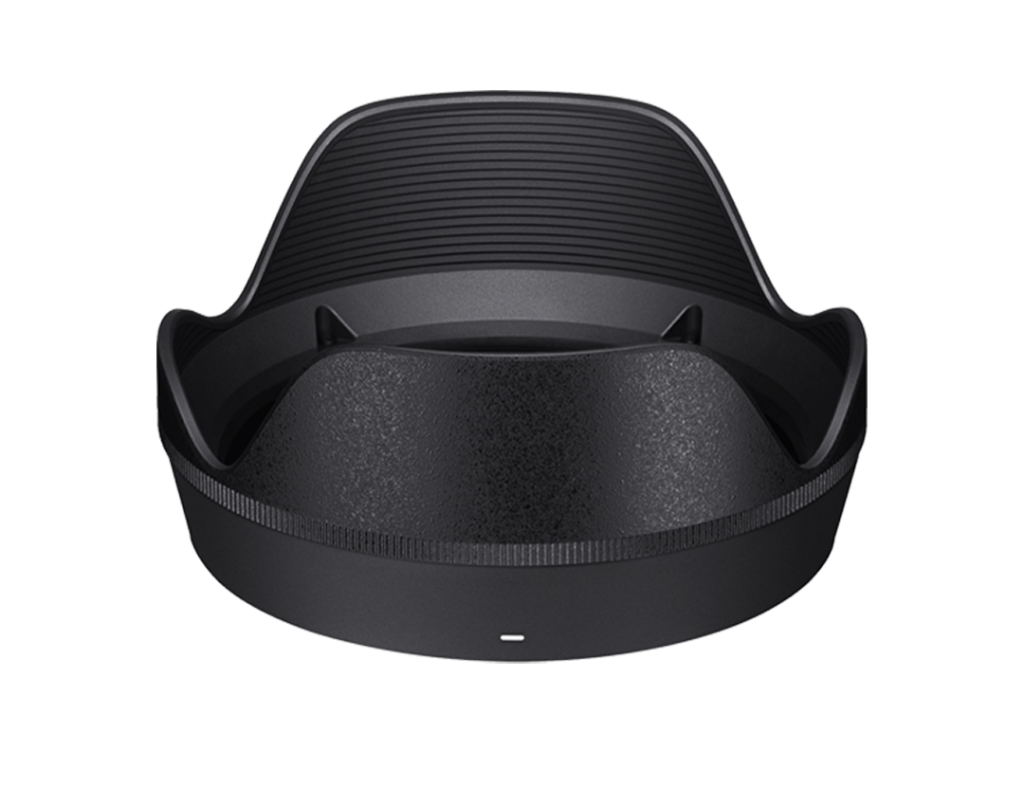
LENS HOOD LH878-07
FRONT CAP LCF-82 III
REAR CAP LCR II

Mount / Product BarcodeL-Mount:00-85126-63669-2
Sony E-mount:00-85126-63665-4
Camera CompatibilityLINK

* The appearance and specifications of the product are subject to change.
* This product is developed, manufactured and sold based on the specifications of E-mount which was disclosed by Sony Corporation under the license agreement with Sony Corporation.
* L-Mount is a registered trademark of Leica Camera AG.

Constant F2.8 aperture across a versatile 28-105mm zoom

Many conventional zoom lenses which have a reach up to 105mm do not offer a constant F2.8 aperture, usually dropping to F4 at the long end. But the Sigma 28-105mm F2.8 DG DN | Art delivers the same impressive light-gathering and depth-of-field benefits across the whole focal range. The lens offers all of this along with extremely high optical performance thanks to the thorough suppression of optical aberrations within each lens group. And with its outstanding close-focusing capability when zoomed in, macro-style results are also possible.


A versatile F2.8 aperture perfect for portraits and low light

With its fast aperture across the whole focal range, the Sigma 28-105mm F2.8 DG DN | Art is a true workhorse lens that can be used for almost any type of photography. Scenic photographers can shoot wide-angle landscapes, using the F2.8 aperture for low-light scenes and twilight urban views, while the middle focal lengths tackle dimly lit documentary and street subjects, allowing shutter speeds one stop faster than comparable lenses. At the long end, popular portrait focal lengths from 85mm and 105mm, combined with the F2.8 maximum aperture, produce a shallow depth-of-field that will isolate a subject impressively against large and beautiful bokeh


Fill the frame with superb close-up performance

Achieving a minimum focus distance of just 40cm across its entire zoom range, the Sigma 28-105mm F2.8 DG DN | Art can get you closer to your subject, filling the frame with detail and texture. At its 105mm setting, this creates a very useful maximum magnification ratio of 1:3.1 for powerful macro-style results.


Superior optical performance across the full zoom and focus range

The Sigma 28-105mm F2.8 DG DN | Art operates without compromise, suppressing aberrations very effectively within each lens group, and throughout the entire zoom and focal range. This ensures the lens has a consistent performance even with such a long zoom range. This is thanks to the lens’s premium optical design, which includes two FLD, one SLD and five aspherical elements, the first grouping of which uses a large-diameter φ66.4mm element that is extremely difficult to produce and only available thanks to Sigma’s advanced manufacturing technology at its sole production base in Aizu, Japan.


Designed to minimize flare and ghosting

Using advanced simulation technology, flare and ghosting have been largely eliminated, ensuring that the lens renders rich, high-contrast results in all conditions. In addition, Sigma’s Nano Porous Coating and Super Multi-Layer Coating have been applied to further suppress flare and ghosting.


Minimal focus breathing

Vital for film-makers who demand consistent framing, the lens has been designed to keep focus breathing to a minimum. This ensures that any changes to the angle-of-view due to focus shift are minimized across the entire zoom range, ensuring natural-looking focus pulls when recording video, and easier image alignment when focus stacking.


LENS CONSTRUCTION


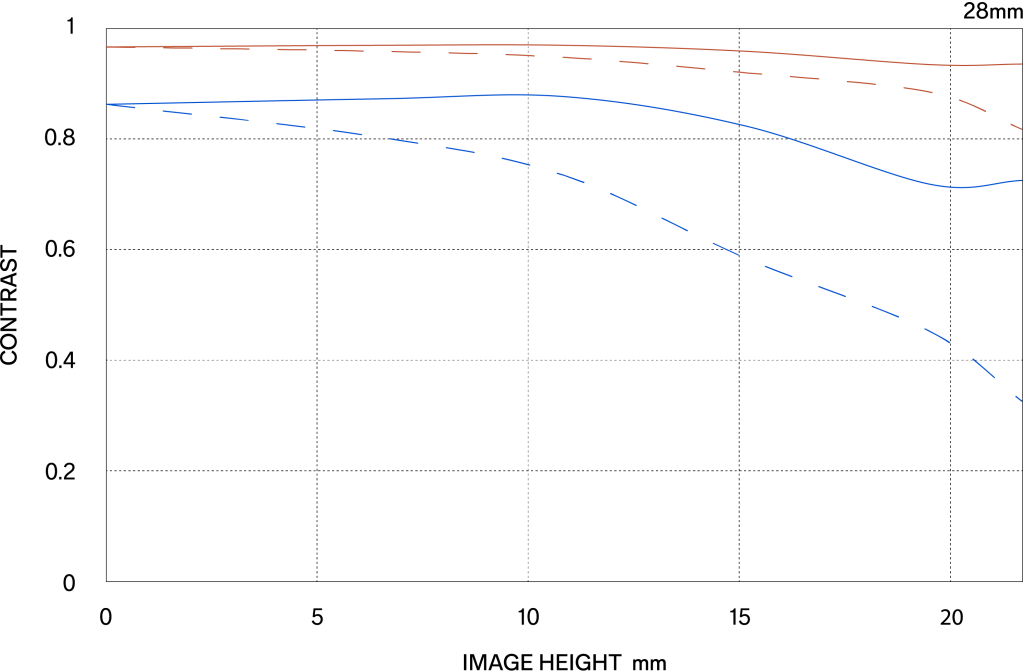
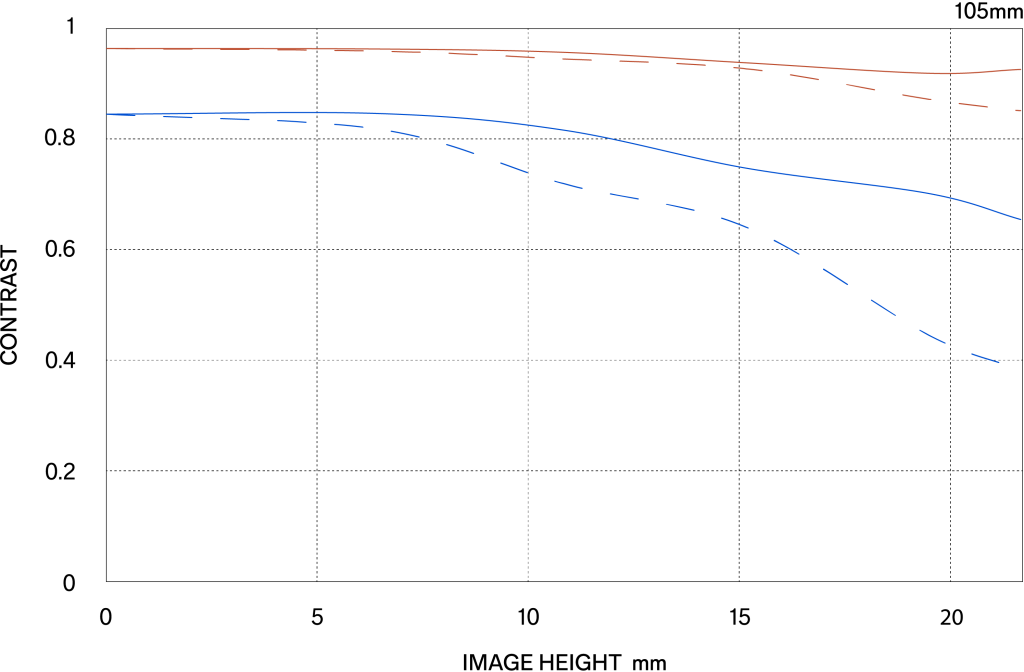
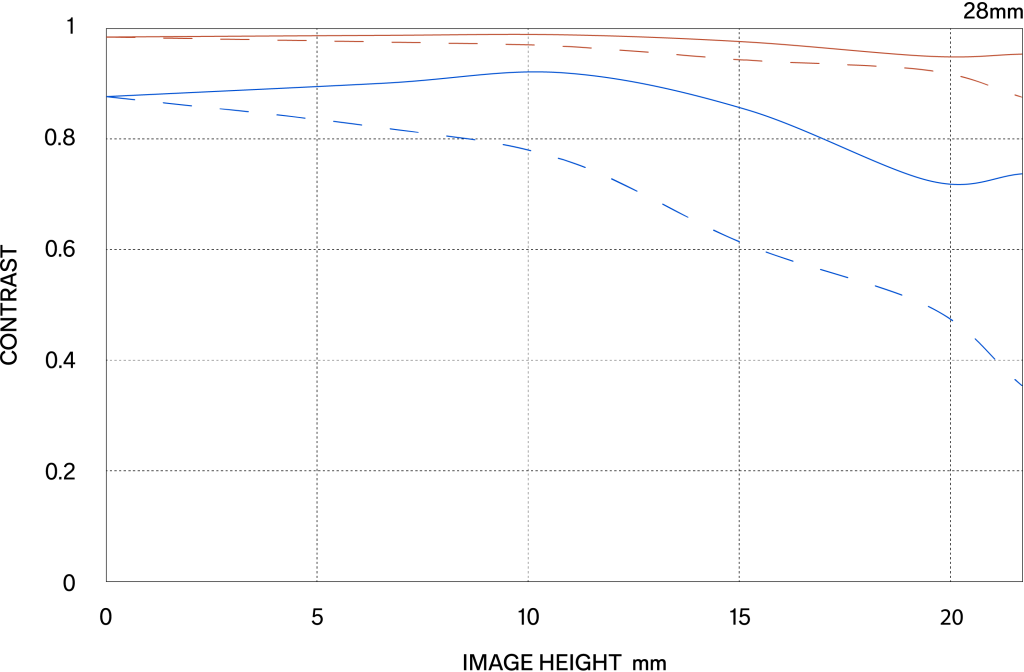
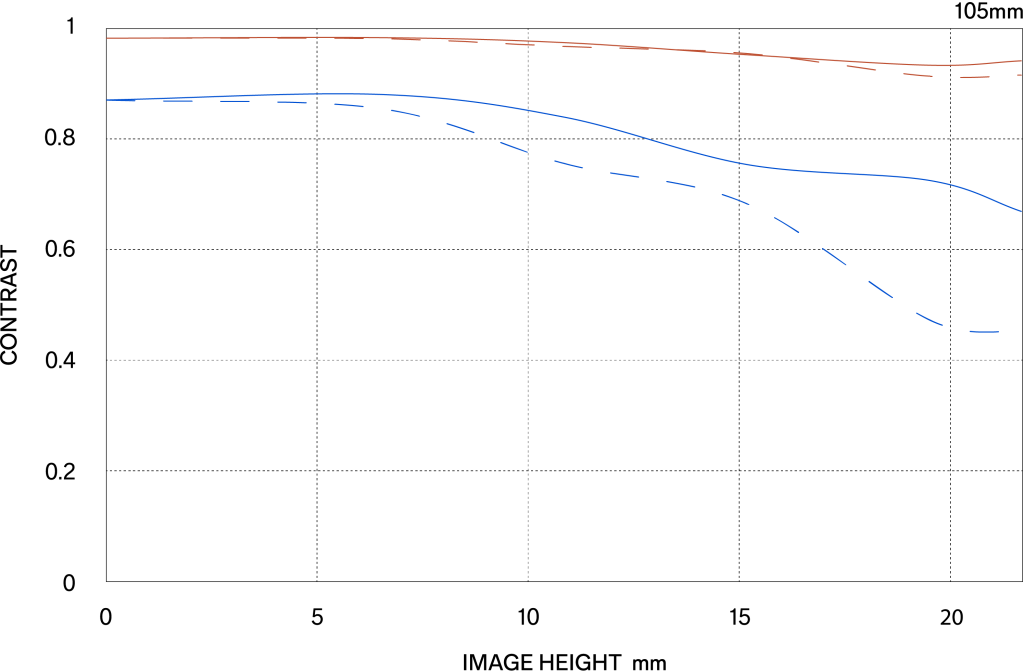
MTF Chart


DIFFRACTION MFT


DIFFRACTION MFT


GEOMETRICAL MFT


GEOMETRICAL MFT


MTF CHART GUIDE

The MTF (Modulation Transfer Function) is one of the measurements for evaluating a lens’ performance, and it shows how faithfully the contrast of the subject can be reproduced on the image plane. The horizontal axis shows the image height (distance from the center of the image in mm) and the vertical axis shows the contrast value (maximum value is 1).
The closer the 10 line pairs/mm curve is to 1, the higher the contrast and clarity of the lens is, and similarly, the closer the 30 line pairs/mm curve is to 1, the better the resolution and sharpness of the lens is.

*The MTF chart depicts the result at the wide-open aperture.
*For mirrorless lenses that support distortion correction, the horizontal axis shows the image height equivalent to when an L-Mount lens is attached to a Sigma L-Mount camera with distortion correction applied. (The effect of distortion correction may differ depending on the mount and camera used.)
*The spatial frequency indicates the variation on the image plane before distortion correction is performed.

Inner focus system

To increase stability, this lens configuration uses movable internal lens elements that adjust focus without changing the length of the lens barrel.


HLA (High-response Linear Actuator)

HLA is Sigma’s proprietary linear motor. It drives the focus lens directly without going through gears or other mechanical parts, resulting in quiet, high-precision autofocusing.


Compatible with Lens Aberration Correction

Matching the optical characteristics of the lens, this function performs in-camera corrections of peripheral illumination, chromatic aberrations, distortion, and more, to further enhance image quality.

*Function available on supported cameras only. Available corrections or auto correction functionality may vary depending on the camera model.
*On cameras where lens aberration correction is controlled with ‘ON’ or ‘OFF’ in the camera menu, please set all aberration correction functions to ‘ON'(AUTO).


Nano Porous Coating

The super multi-layer coating is combined with Sigma’s unique coating technology “NPC (Nano Porous Coating)”. The lens has been designed to be less susceptible to strong incident light such as backlight.
“NPC (Nano Porous Coating)” incorporates porous silica as the coating material. The porous silica layer has nano-sized holes with air inside. Having holes of this size enables a large reduction in the refractive index, allowing the reflectance to be lowered more than conventional anti-reflective coatings. As a result, reflected light causing flares and ghosting is sharply reduced, achieving clear image quality.


Super Multi-Layer Coating

Sigma’s own Super Multi-Layer Coating suppresses flare and ghosting by preventing reflections with in the lens. All lenses in the current Sigma range feature this original technology. In digital cameras, flare and ghosting may also be caused by reflections between the image sensor and lens surfaces. Here too, Sigma’s Super Multi-Layer Coating is highly ef fective, assuring images of outstanding contrast.


Water and oil repellent coating

Incorporates a water and oil-repellent coating that allows water to be wiped away easily and prevents oil and fat from sticking to the surface, even in challenging shooting conditions. At the same time, the maintenance of the lens surface becomes easier.


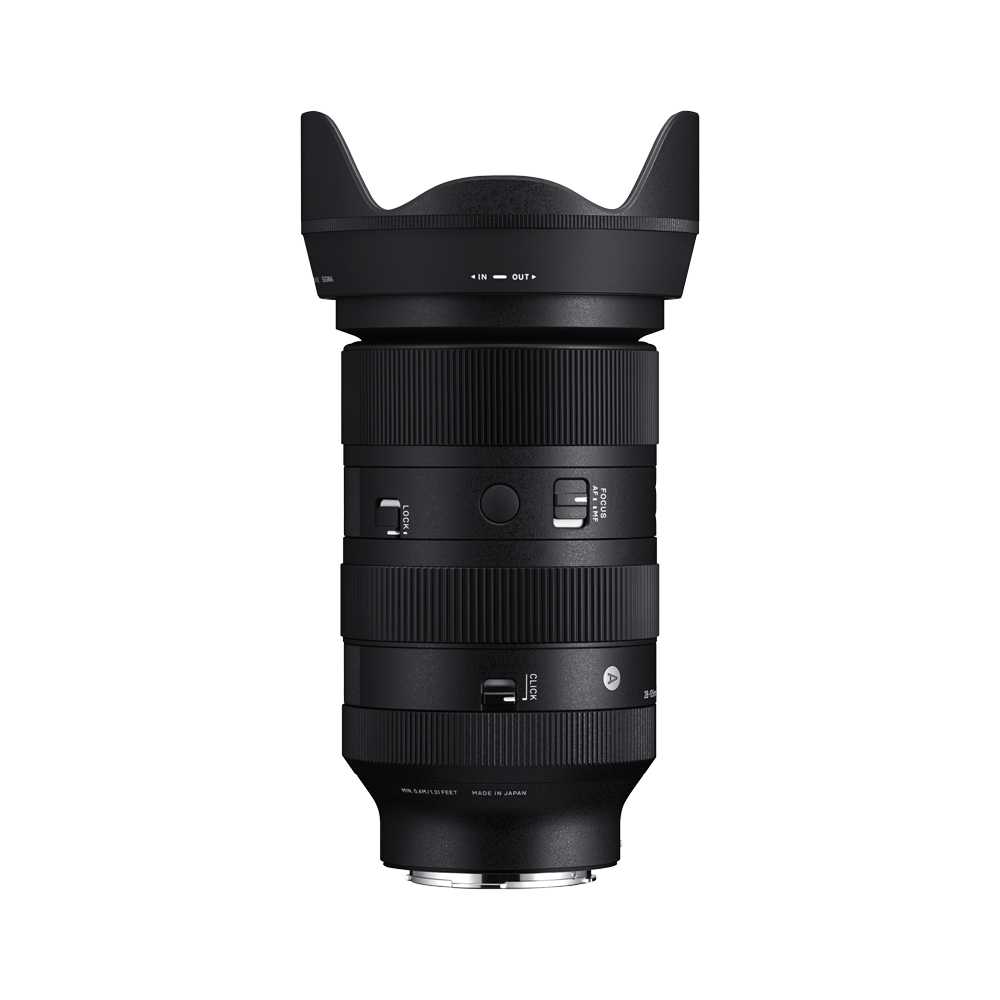
Aperture ring

Aperture ring, designed to help users work intuitively


Aperture ring click switch

Mounted with a de-click function for removing clicks by the aperture ring click switch, enabling seamless operations that are especially useful such as during video shooting.


Aperture ring lock switch

A ring lock system to prevent from unintended movement of the aperture ring during shooting.


AFL button

the AFL button can be assigned with various functions widens the range of operations available on the lens.


Focus Mode Switch

Using this swich, it is possible to switch the focus mode between AF and MF.


Linear focus / Non-linear focus (for L-Mount only)

A focus movement method of interchangeable lenses for mirrorless cameras (DN lens) in relation to the rotational angle of the focus ring during manual focusing.
With “non-linear focus,” the amount of focal point movement varies depending on the focus ring rotational speed.
With linear focus, if the focus ring rotational angle is the same, the amount of focal point movement remains the same regardless of the focus ring rotational speed.


Dust and Splash Resistant Structure

This lens features a highly effective dust and splash resistant structure with special sealing at the mount connection, manual focus ring, zoom ring, and cover connection.

*Although this construction allows the lens to be used in light rain, it is not the same as being waterproof, so please prevent large amounts of water from splashing on the lens. It is often impractical to repair the internal mechanism, lens elements and electric components if they are damaged by water.


Rounded diaphragm

The polygonal shape of a conventional iris diaphragm causes out-of-focus light points to appear polygonal. A rounded diaphragm is designed to produce rounded out-of-focus light points when opened to near maximum aperture. This creates attractive bokeh effects in many situations, such as when photographing a subject against an out-of-focus surface of water from which light is being reflected.


Compatible with high-speed autofocus

Supports DMF and AF+MF

Compatible with AF assist (for Sony E-mount only)

Petal-type hood with lock LH875-05


Designed to minimize flare and ghosting

Every single lens undergoes Sigma’s proprietary MTF measuring system

High-precision, durable brass bayonet mount

Mount Conversion Service available

“Made in Aizu, Japan” craftsmanship

CameraSony α7R IV
Shutter Speed1/640s
Lens F NumberF2.8
ISO320
Focal Length105mm
PhotographerMeg Loeks

CameraSIGMA fp L
Shutter Speed1/60s
Lens F NumberF8
ISO200
Focal Length28mm
PhotographerNoriko Yamaguchi

CameraPanasonic DC-S5M2
Shutter Speed1/2s
Lens F NumberF11
ISO100
Focal Length28mm
PhotographerDarren White