SIGMA

CONTEMPORARY

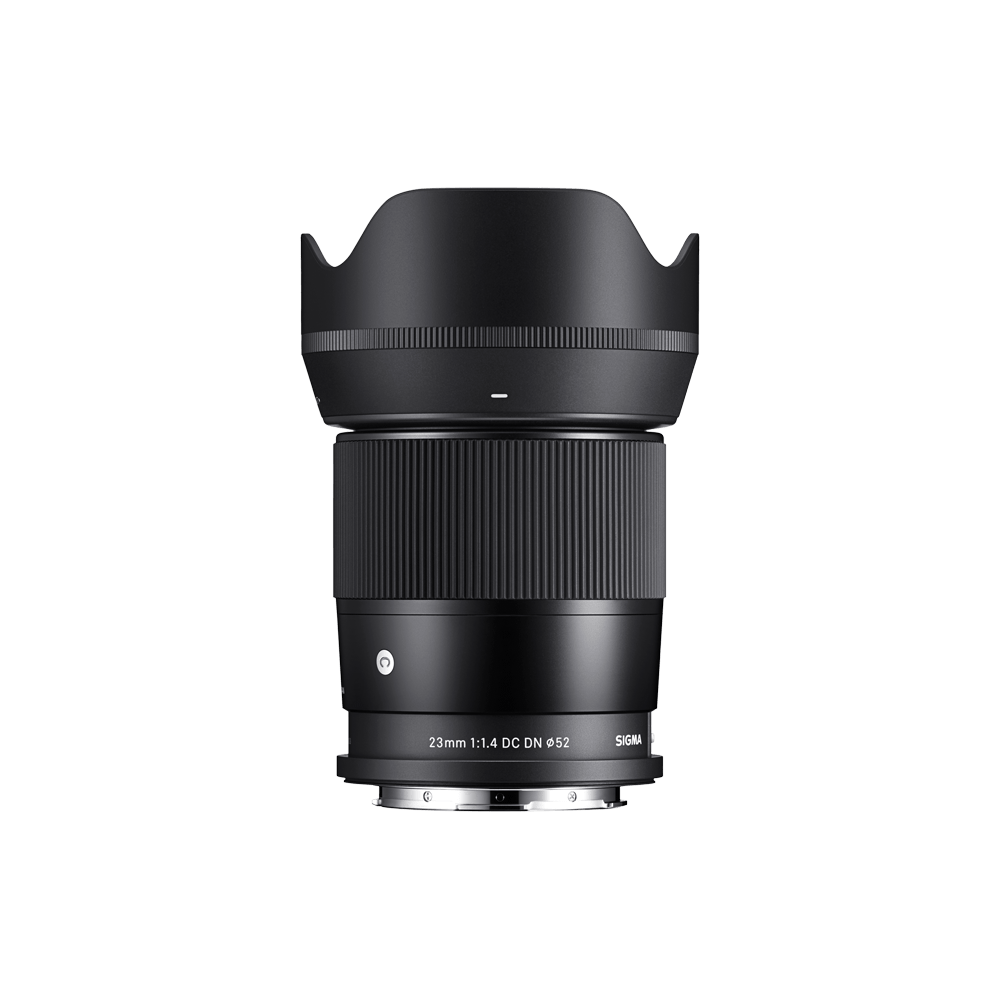
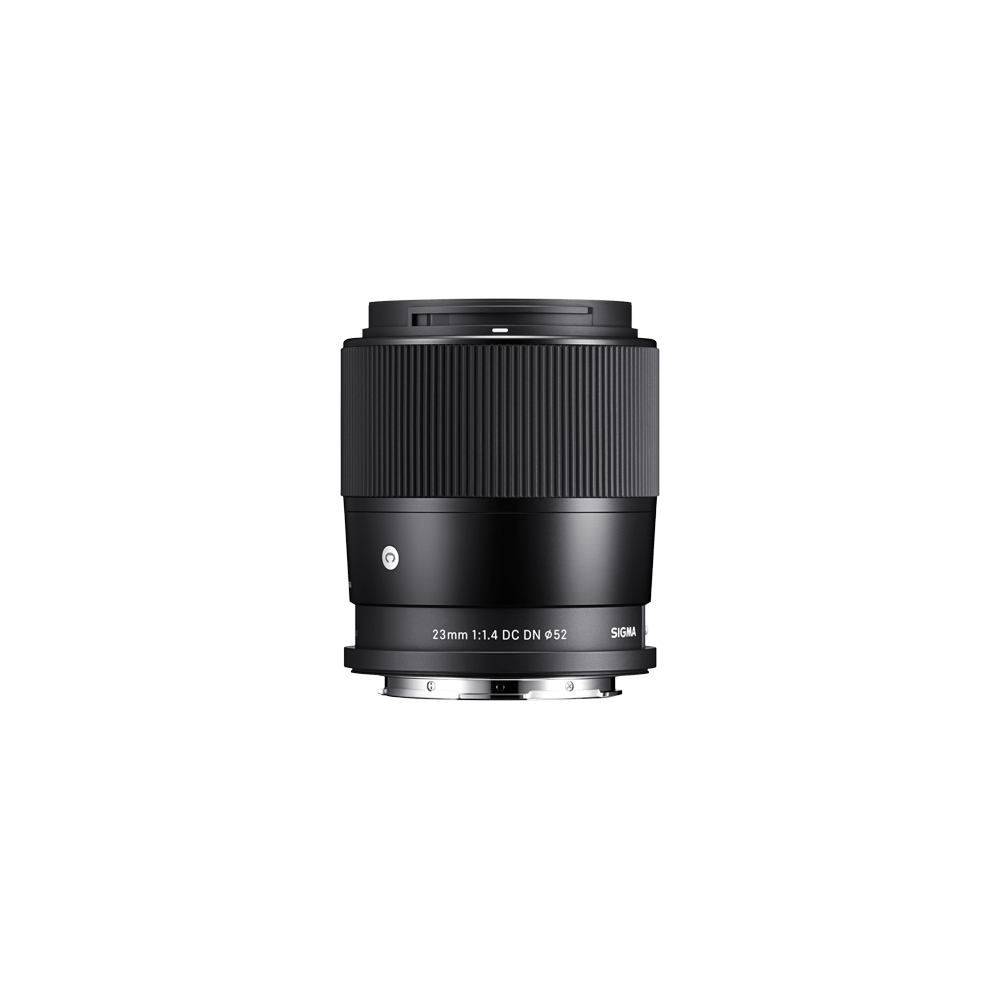
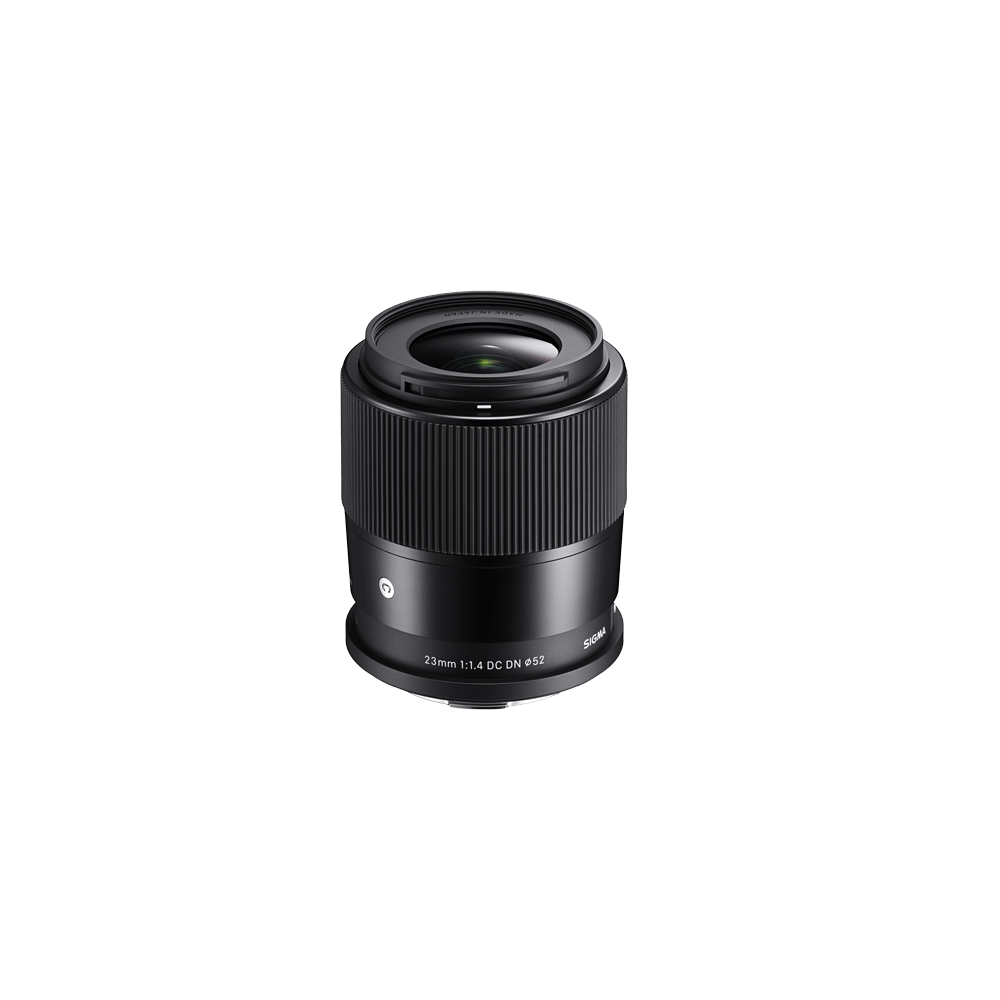
23mm F1.4 DC DN

CONTEMPORARY

23mm F1.4 DC DN

Available Mounts

L-MOUNT
SONY E-MOUN
CANON RF MOUNT
FUJIFILM X MOUNT

A prime lens like a longtime friend

The wide-angle lens ideal for APS-C mirrorless cameras
joins the Contemporary line.
High optical performance, F1.4 brightness,
and compact enough to carry around every day.

With an easy-to-use angle of view of 35mm*, high optical performance, the brightness of a large F1.4 aperture, and a compact and lightweight lens body, Sigma’s experience accumulated in the Contemporary line has culminated in a lens that is ideal for use with APS-C mirrorless cameras. The lens offers excellent resolution from maximum aperture and the rich bokeh effects thanks to its F1.4 brightness. The lens demonstrates its descriptive power in a wide range of applications, including landscapes, portraits, and tabletop photography. In order to take advantage of the high mobility of mirrorless cameras, compactness of the lens body was also pursued. The Sigma’s Contemporary lineup includes several compact and lightweight F1.4 prime lenses in the APS-C format, which are surprisingly compact to carry around. If you want to keep your equipment light and small, but not compromise on image rendering performance, this lens is sure to meet your needs, and will be a lens you will never want to let go.

*35mm equivalent


Camera TypeMirroless
Corresponding MountL-Mount,Canon RF Mount,FUJIFILM X Mount,Sony E-mount
Sensor FormatAPS-C [DC]
Lens Construction13 elements in 10 groups (3 SLD and 2 aspherical elements)
Angle of View

63.4 °

Number of Diaphragm Blades

9 (rounded diaphragm)

Minimum ApertureF16
Minimum Focusing Distance

25cm / 9.8in.

Maximum Magnification Ratio1:7.3
Filter Sizeφ52mm
Dimensions (Diameter × Length)

L-Mount:φ65.8mm × 76.9mm / φ2.6in. × 3.0in.
Canon RF Mount:φ69.0mm × 76.9mm / φ2.7in. × 3.0in.
FUJIFILM X Mount:φ65.8mm × 79.2mm / 2.6in. × 3.1in.
Sony E-mount:φ65.8mm× 78.9mm / 2.6in. × 3.1in.

*The length of a lens is measured from the filter surface to its mount.

Weight

L-Mount:340g / 12.0oz.
Canon RF Mount:345g / 12.2oz.
FUJIFILM X Mount:335g / 11.8oz.
Sony E-mount:330g / 11.6oz.

Edition Number

C023

The three-digit code on the surface of the lens is to indicate the year the lens was first released.
(Since it is different from the year of manufacture, the release year and edition number may not match depending on the mount.)

Supplied Accessories

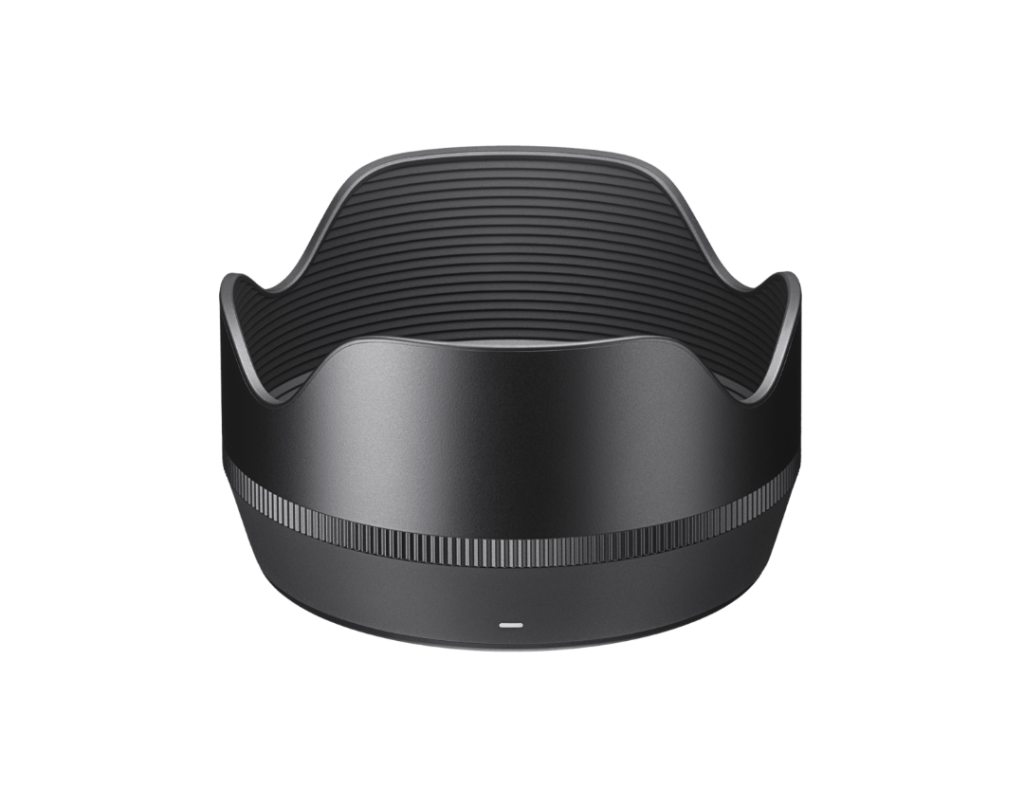
Petal Type Lens Hood LH554-01
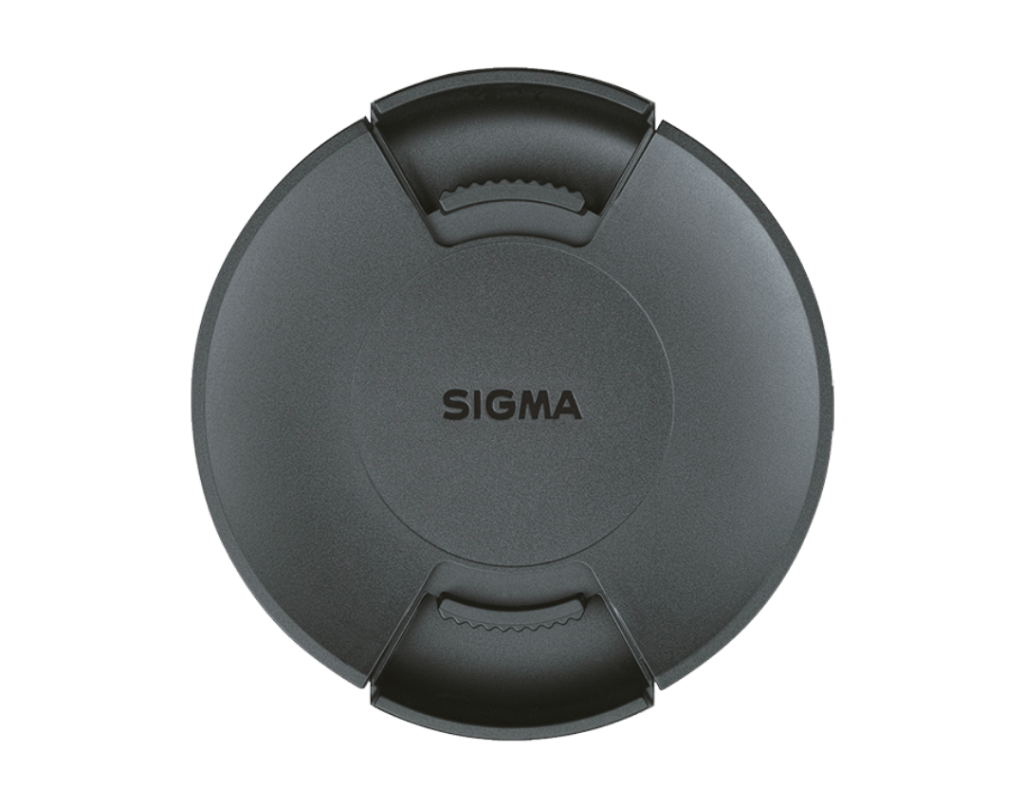
FRONT CAP LCF-52 III
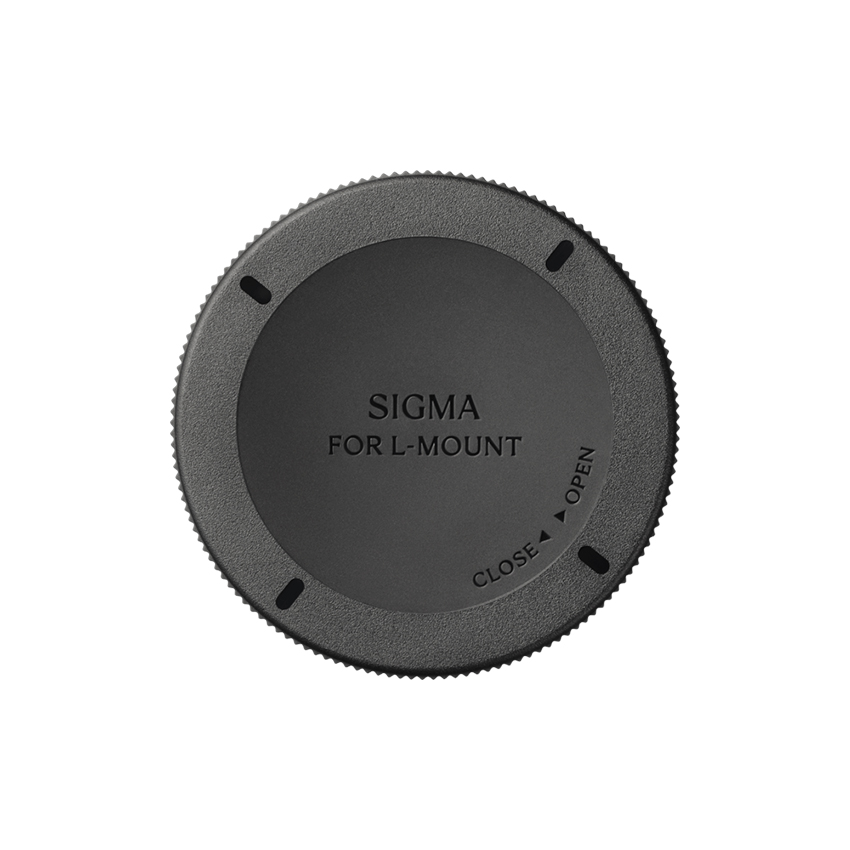
REAR CAP LCR II

Mount / Product BarcodeL-Mount:00-85126-34869-4
Canon RF Mount:00-85126-34872-4
FUJIFILM X Mount:00-85126-34875-5
Sony E-mount:00-85126-34865-6
Camera CompatibilityLINK
* L-Mount is a registered trademark of Leica Camera AG.
* Sony E-mount is developed, manufactured and sold based on the specifications of E-mount which was disclosed by Sony Corporation under the license agreement with Sony Corporation.
* Canon RF Mount is developed, manufactured and sold under license from Canon Inc.

Large aperture F1.4 brightness and excellent resolution from maximum aperture

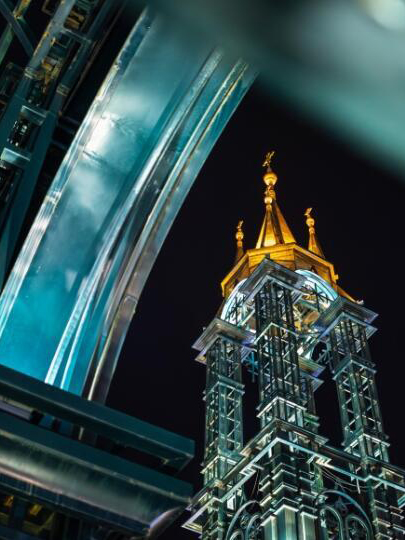
The Sigma 23mm F1.4 DC DN | Contemporary has an easy-to-use angle of view equivalent to 35mm in 35mm format, as well as the brightness of a large F1.4 aperture and high descriptive power. The optics is composed of 13 elements in 10 groups, including 3 SLD glass elements and 2 aspherical lens elements, to achieve sharp, clear images. The lens delivers excellent resolving power from the maximum aperture. Furthermore, the large F1.4 aperture allows for large, beautiful bokeh effects. The compact, palm-size body allows you to enjoy the rich descriptive power of mirrorless cameras. Careful countermeasures against flare and ghosting enable clear shooting even in backlit environments.


Compact body optimized for APS-C mirrorless cameras
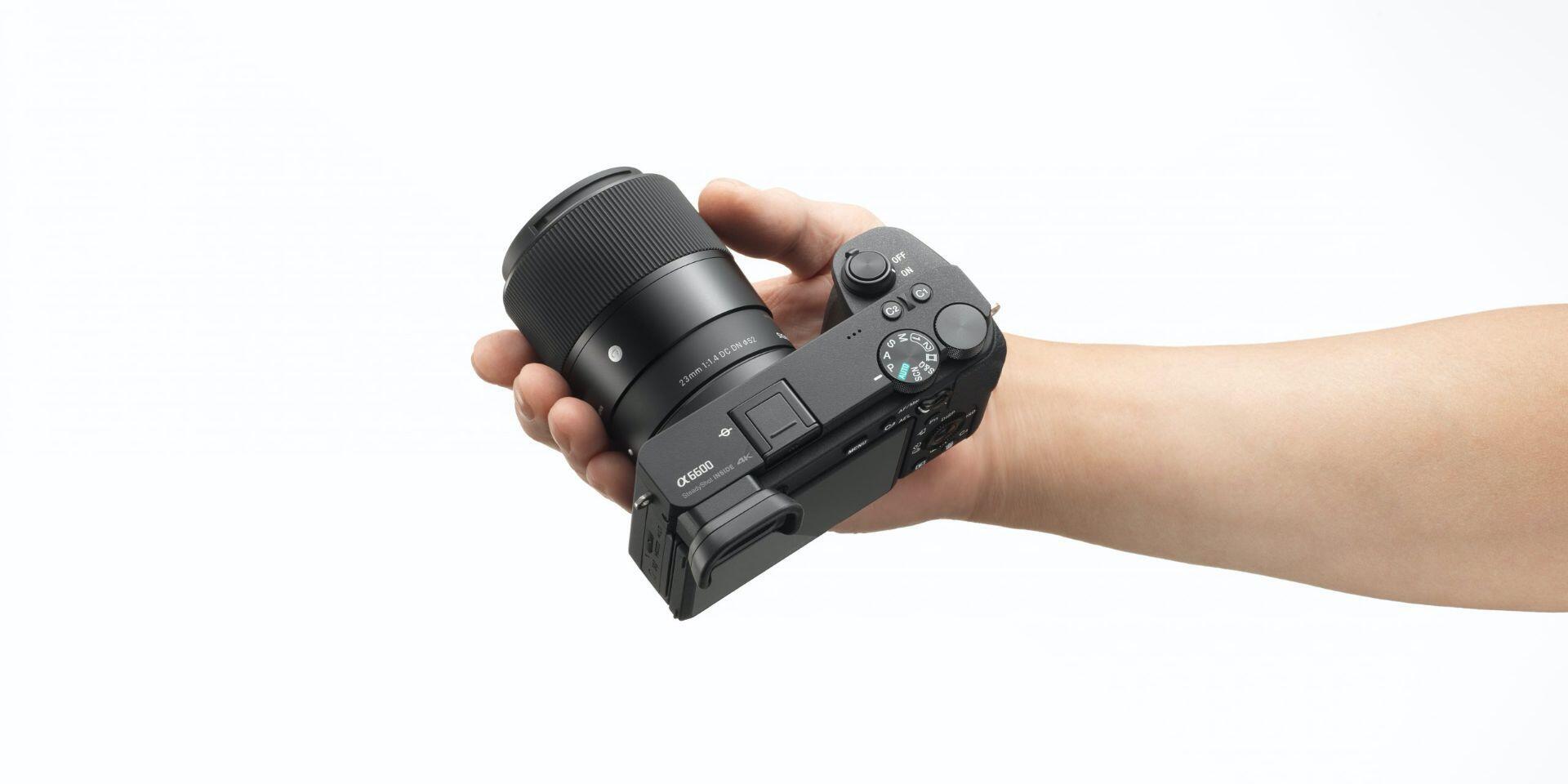
To take advantage of the mobility of APS-C mirrorless cameras, the lens body is compact and lightweight, with a weight of 340g*, length of 76.9mm*, and filter diameter of 52mm. At the same time, the quality of the lens body itself has not been compromised. The high-precision machining technology of Sigma’s sole production facility in Aizu, Japan, has enabled the lens body to achieve the ideal balance between excellent optical performance based on the latest optical and mechanical design and compactness. The AF drive system uses a quiet, high-speed stepping motor. The latest algorithm enables quick focusing for easy shooting.

*The figures are for L-Mount.


Support for switching between linear and non-linear focus ring settings (for L-Mount only)

For L-Mount cameras, it is possible to switch to “linear focus,” in which the focus shifts by a fixed amount according to the rotation angle of the focus ring.

*Only for compatible L-Mount camera bodies.


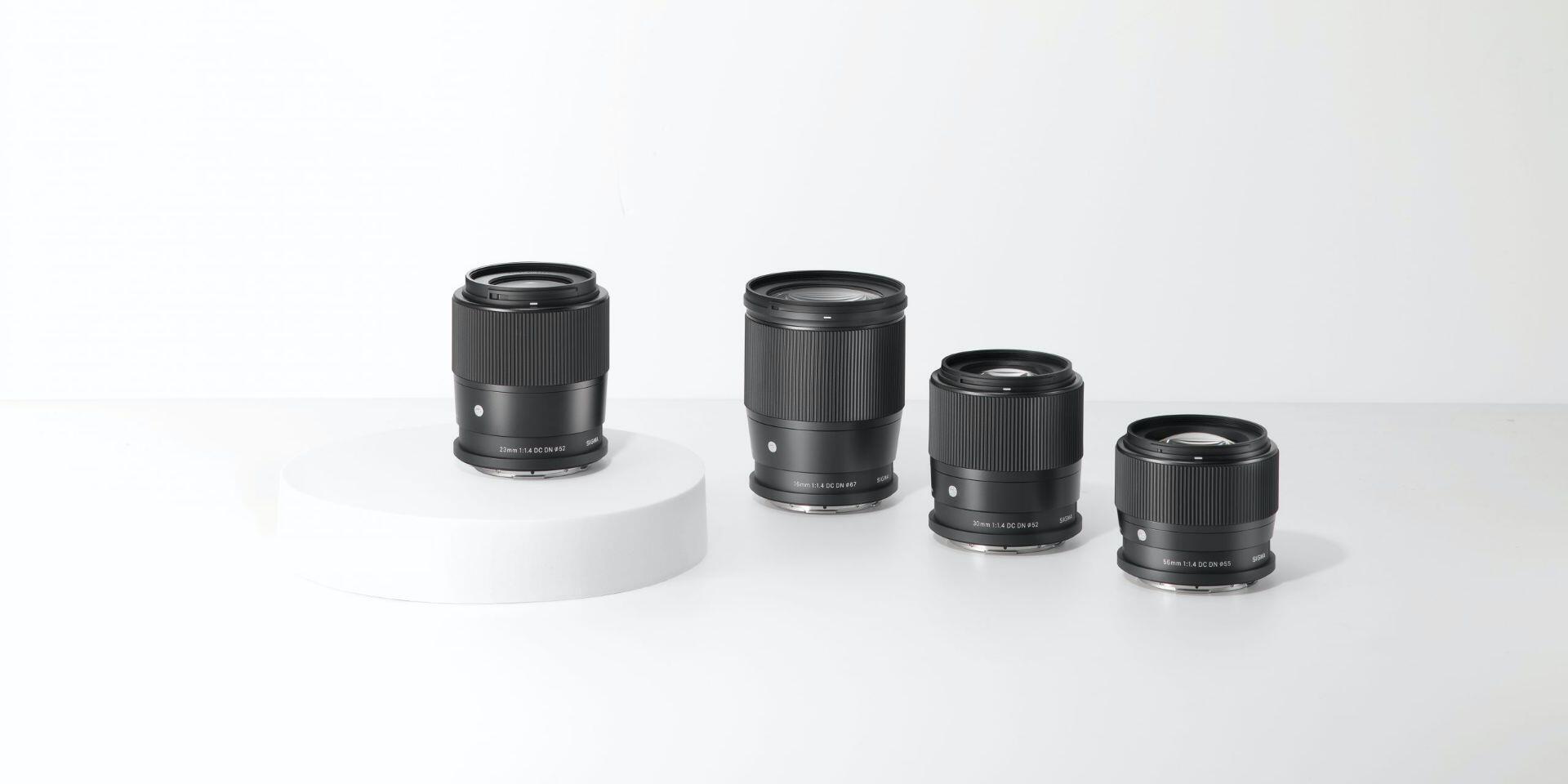
Expands the variety of APS-C format F1.4 prime lenses

The Sigma Contemporary line offers a wide variety of APS-C format F1.4 prime lenses. All of them share the concept of combining superior resolution with compactness and light weight. By combining them according to your needs, you can build a compact photographic system without compromising on image quality.


LENS CONSTRUCTION


MFT CHART


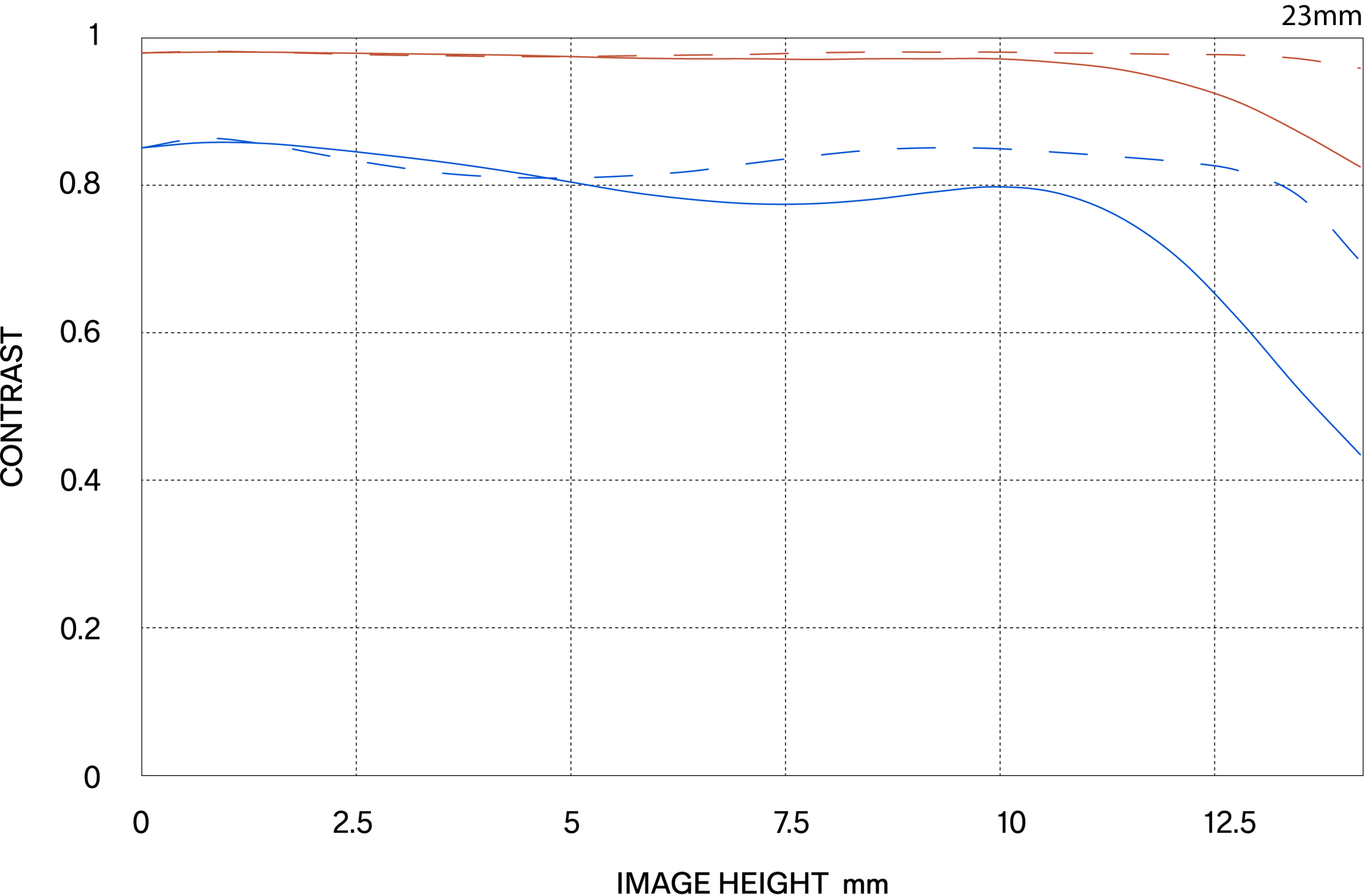
DIFFRACTION MTF
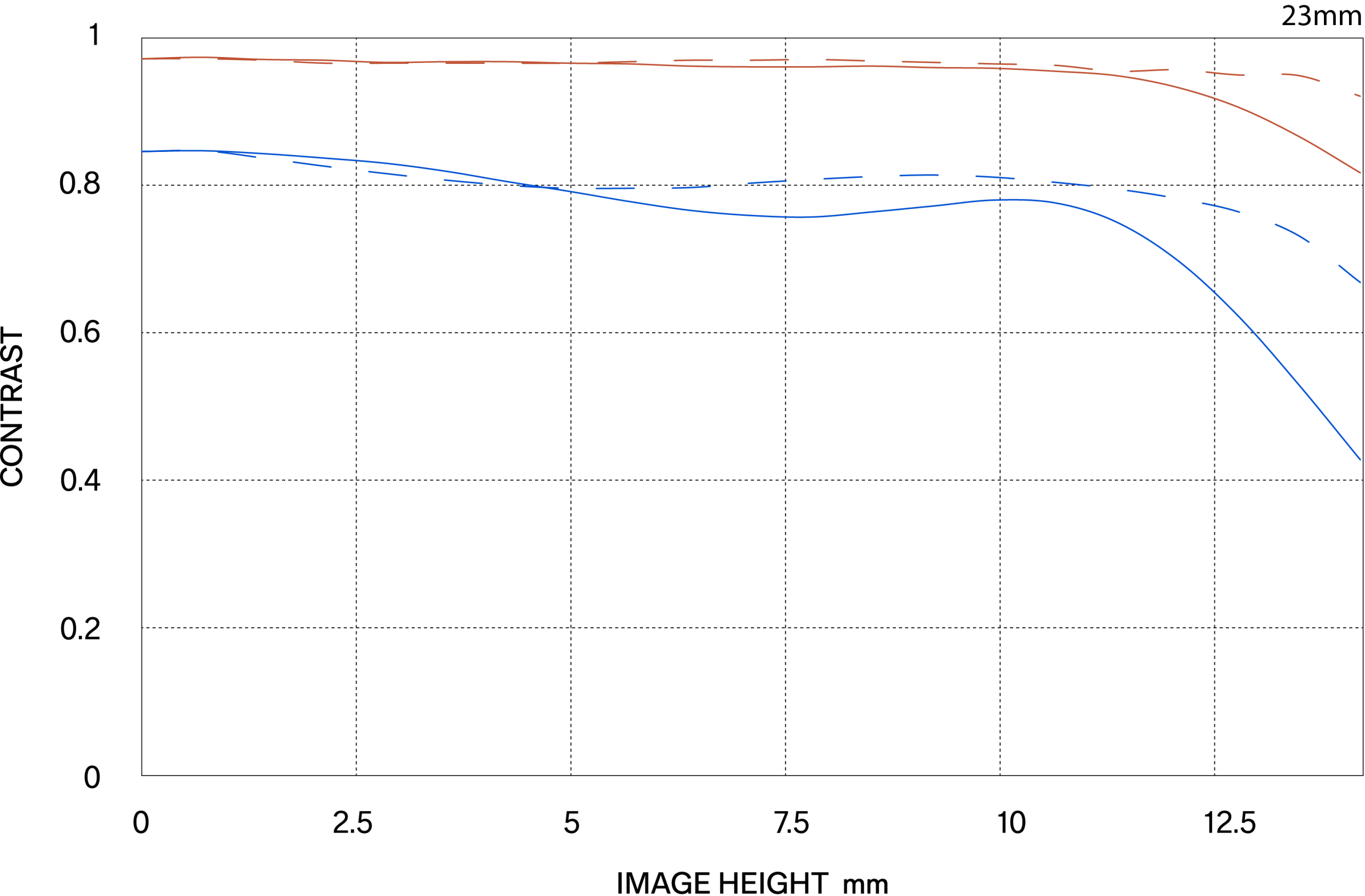
GEOMETRICAL MTF


MTF CHART GUIDE

The MTF (Modulation Transfer Function) is one of the measurements for evaluating a lens’ performance, and it shows how faithfully the contrast of the subject can be reproduced on the image plane. The horizontal axis shows the image height (distance from the center of the image in mm) and the vertical axis shows the contrast value (maximum value is 1).
The closer the 10 line pairs/mm curve is to 1, the higher the contrast and clarity of the lens is, and similarly, the closer the 30 line pairs/mm curve is to 1, the better the resolution and sharpness of the lens is.

*The MTF chart depicts the result at the wide-open aperture.
*For mirrorless lenses that support distortion correction, the horizontal axis shows the image height equivalent to when an L-Mount lens is attached to a Sigma L-Mount camera with distortion correction applied. (The effect of distortion correction may differ depending on the mount and camera used.)
*The spatial frequency indicates the variation on the image plane before distortion correction is performed.

Linear focus / Non-linear focus (for L-Mount only)

A focus movement method of interchangeable lenses for mirrorless cameras (DN lens) in relation to the rotational angle of the focus ring during manual focusing.
With “non-linear focus,” the amount of focal point movement varies depending on the focus ring rotational speed.
With linear focus, if the focus ring rotational angle is the same, the amount of focal point movement remains the same regardless of the focus ring rotational speed.


High-precision, rugged brass bayonet mount

The brass mount combines high precision with rugged construction. Its treated surfaces and enhanced strength contribute to the exceptional durability of the lens.


Mount with Dust and Splash Resistant Structure

The lens mount incorporates rubber sealing to protect the mount from dust and water drops.


Rounded diaphragm

The polygonal shape of a conventional iris diaphragm causes out-of-focus light points to appear polygonal. A rounded diaphragm is designed to produce rounded out-of-focus light points when opened to near maximum aperture. This creates attractive bokeh effects in many situations, such as when photographing a subject against an out-of-focus surface of water from which light is being reflected.


Exclusive low-dispersion glass

The degree to which light is refracted by glass depends on the light’s wavelength. This fact causes different colors of light to focus at slightly different points. The result is chromatic aberration, the color fringing that is particularly noticeable in telephoto lenses. Most chromatic aberration can be removed by combining a high-refractivity convex lens element with a low-refractivity concave element. Yet residual chromatic aberration known as “secondary spectrum” may still remain. To minimize this secondary spectrum, which can be a serious issue with conventional lenses, Sigma lenses feature up to three types of exclusive low-dispersion glass offering superior performance: ELD (Extraordinary Low Dispersion), SLD (Special Low Dispersion) and FLD (“F” Low Dispersion). In particular, FLD glass offers ultra-low dispersion in combination with high transmittance and the anomalous dispersion characteristics of fluorite. Meticulous deployment of these types of exclusive low-dispersion glass and optimization of power distribution gives Sigma lenses superlative image rendition undiminished by residual chromatic aberration.


CameraSONY α7R IV
Shutter Speed1/2000s
Lens F NumberF1.4
ISO200
Focal Length23mm
PhotographerMasato Ono

CameraSIGMA fp L
Shutter Speed1/125s
Lens F NumberF1.4
ISO640
Focal Length23mm
PhotographerHuang Jian Liang

CameraFUJIFILM X-H2
Shutter Speed1/100s
Lens F NumberF10
ISO125
Focal Length23mm
PhotographerTadateru Takahashi